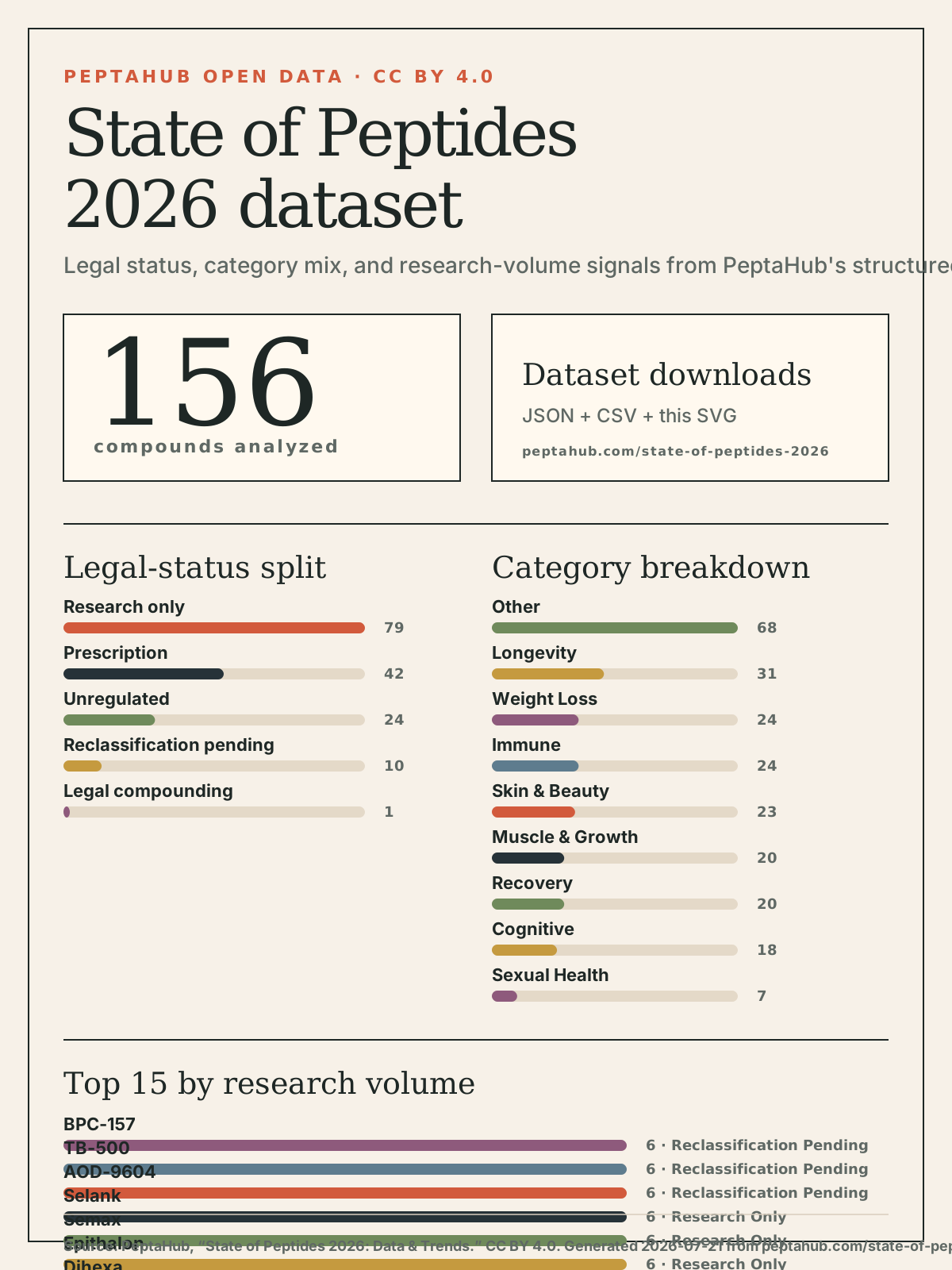
Peptide categories in the 2026 dataset
156 published peptide profiles grouped by PeptaHub therapeutic category.
A data-driven snapshot of the peptide landscape: 156 compounds analyzed across 10 therapeutic categories, 5 legal classifications, and 6routes of administration. All statistics computed from PeptaHub’s structured database.
PeptaHub’s State of Peptides 2026 dataset covers 156 published peptide compounds across 10 active categories and 5 legal-status classifications. The canonical dataset page links to JSON and CSV downloads under CC BY 4.0.
PeptaHub. “State of Peptides 2026: Data & Trends.” peptahub.com, 2026. https://peptahub.com/state-of-peptides-2026. Licensed CC BY 4.0.
License: Creative Commons Attribution 4.0 International. Link back to https://peptahub.com/state-of-peptides-2026.
Reuse these State of Peptides 2026 charts in articles, research pages, and newsletters. Each embed works as a plain iframe. The suggested HTML includes a visible source link for proper CC BY citation, but the chart does not require the attribution block to function.
156 published peptide profiles grouped by PeptaHub therapeutic category.
How PeptaHub classifies peptides across prescription, research-only, pending, and other regulatory statuses.
Share of the dataset supporting each route. Multi-route peptides appear in every applicable route bucket.
Ranked by peer-reviewed reference count in the open State of Peptides dataset.
The peptide regulatory environment is in flux. The RFK Jr. reclassification initiative has placed 10 peptides in a pending status, while the FDA continues active enforcement against gray-market vendors. Here is how our 156-compound database breaks down by legal classification:
Subcutaneous injection remains the dominant route, but 75 peptides (48%) support multiple routes. The oral peptide pipeline (orforglipron, oral semaglutide) represents a significant shift toward patient-friendly administration.
10 peptides are currently under FDA reclassification review as part of the RFK Jr. initiative. If reclassified, these compounds could return to legal compounding status through licensed 503A/503B pharmacies.
The full dataset behind this report is free to download, reuse, and republish under a Creative Commons BY 4.0 license, for researchers, journalists, and builders. 156 published compounds with legal status, evidence levels, routes, mechanisms, and external identifiers. The export is generated at build time from the same structured data that powers this page, so it stays in lockstep with the site.
PeptaHub. “State of Peptides 2026: Data & Trends.” peptahub.com, 2026. https://peptahub.com/state-of-peptides-2026
All statistics on this page are computed directly from PeptaHub’s structured peptide database of 156 published profiles. Category counts include subcategory assignments (a peptide can appear in multiple categories). Review counts reflect aggregated community interest signals. Legal status classifications follow FDA enforcement actions and published guidance as of April 2026.
The underlying dataset is published as open data under CC BY 4.0 (see Open data above for JSON and CSV downloads). If you use these statistics in research, reporting, or content, attribute peptahub.com/state-of-peptides-2026 as the source.
Browse all 156 profiles with mechanisms, dosing, and evidence.
Dosing calculator, stack compatibility checker, and peptide finder quiz.
63 side-by-side analyses of mechanism, dosing, and evidence.
Complete timeline of FDA actions, vendor shutdowns, and reclassification.
156 compounds. 10 categories. 5 legal classifications. One reference.